When entire teams work at one location for months on large-scale projects, accommodation becomes a logistical challenge. Individual hotel rooms are not only expensive but also hinder team cohesion. Decentralized accommodation leads to coordination problems, inconsistent standards, and high administrative overhead. The solution lies in professional technician accommodations specifically designed for teams—with sufficient privacy in private rooms while offering common areas for collaboration and planning. With over 8 years of experience, home2stay has developed accommodations that strike exactly this balance between individual retreats and team spaces, while providing everything from a single source logistically.
Why Teams Have Special Requirements
Project teams function differently than individual travelers. Colleagues must not only work together but also spend evenings and weekends in the same place. This close collaboration over weeks or months requires thoughtful spatial concepts that enable both community and privacy.
Teams need work areas for meetings, planning, and coordination. After work, reports often still need to be written, drawings discussed, or the next day prepared.
How Many People Fit in a Technician Room?
That depends on the accommodation size. At home2stay, the offering ranges from single rooms to spacious apartments for 6 to 8 people. For larger teams, multiple units in the same building are combined, allowing up to 20 or more people to be accommodated together. Everyone has their own bed in single rooms or small double rooms.
Single Beds Instead of Bunk Beds
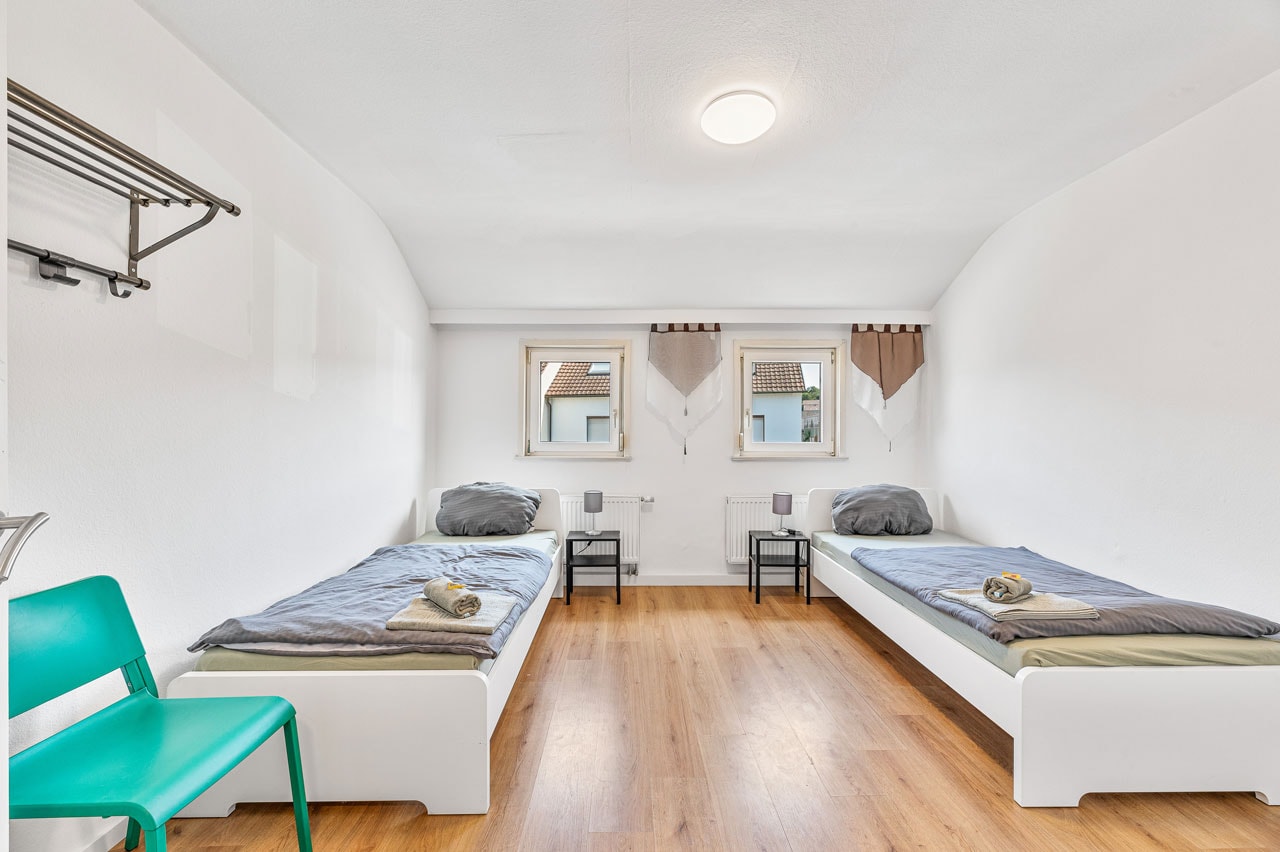
A fundamental difference from budget accommodations: Professional technician rooms with single beds rely on separate rooms instead of dormitories. Adult professionals rightfully expect their privacy. After a demanding workday, no one wants to sleep in a shared room.
Room size matters. At least 12 to 15 square meters per person should be provided so that in addition to the bed, there’s also space for a wardrobe, desk, and armchair. Windows with blackout options ensure restful sleep, even with different work schedules within the team.
Particularly appreciated are apartments with two to three separate bedrooms but a shared kitchen and living area. This layout is ideal for smaller teams of 4 to 6 people.
Technician Rooms for Companies—Centralized Booking Simplifies Everything
For companies, centralized coordination through one provider is worth its weight in gold. Instead of negotiating with ten different landlords, there’s one contact for everything. Booking is done with one contract, billing through one invoice, communication through one point of contact.
This simplification saves an enormous amount of time in project preparation. Team technician accommodations with established providers often enable bookings within 48 hours.
Framework agreements offer additional advantages: fixed terms, priority treatment for availability, and dedicated contacts who know the company’s specific requirements.
Common Areas as Team Hub
Spacious eat-in kitchens become the natural meeting point. In the morning over coffee, the day is discussed; in the evening, people cook and eat together. These informal moments are often more important for team dynamics than official meetings.
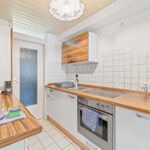
The kitchen must be appropriately sized:
- Large refrigerator for multiple people
- Stove with at least four burners
- Dining table for the entire team
- Sufficient dishes and cooking utensils
- Dishwasher for convenient cleanup
A large dining table serves not only for eating but also as a work surface for meetings. Plans can be spread out, laptops opened, and problems analyzed together.
Technician Rooms with Parking for Every Company Vehicle
Teams usually arrive with multiple vehicles. Everyone needs a secure parking space, often for vans or vehicles with tools and materials. Hotels can rarely provide this—parking spaces are limited and cost extra.
Specialized accommodations plan from the outset for multiple vehicles per booking. The parking spaces are generously sized, have adequate clearance height, and are well-lit. Often there are lockable garages or covered parking spaces for particularly valuable equipment.
Cost Advantages with Group Bookings
The math is simple: Hotels charge per room; technician rooms often charge per person or per apartment. For larger groups, this results in significant price advantages. An apartment for six people costs, for example, €180 per night—that’s €30 per person. Six hotel rooms would cost €600 to €900.
Added to this are reduced meal costs through self-catering. For larger teams, shopping and cooking together is even more worthwhile. Affordable technician rooms in Frankfurt or other expensive cities make the difference between a profitable and loss-making project.
Long-Term Bookings for Large Projects
Construction projects, industrial installations, or infrastructure work often last six months to several years. Contracts are designed flexibly: fixed base term with extension options, moderate notice periods, and adjustment possibilities for changing staffing needs.
With multi-month stays, daily rates drop significantly. From three months onward, discounts of 25 to 35 percent are common. For technician rooms for employees on long-term projects, this pricing structure is crucial.
Infrastructure for Productive Work
Modern project management requires constant digital connectivity. Video conferences with headquarters, cloud access to plans, digital time tracking—all of this needs stable, fast internet. Technician rooms with Wi-Fi should offer at least 100 Mbps; symmetrical gigabit connections are better.
For larger teams, network capacity is critical. When ten people are working online simultaneously, some Wi-Fi networks reach their limits. Professional providers rely on high-performance routers and, if necessary, multiple access points.
Work areas with sufficient power outlets, good lighting, and a quiet atmosphere enable focused work even outside regular working hours.
Location Selection in Metropolitan Areas
In major cities and metropolitan areas, location selection is particularly important. The accommodation must be close to the project site while providing quiet for rest. Industrial areas are noisy during the day but often quiet at night—a good combination for construction site accommodations.
Transportation connections play a major role. When the team travels to different deployment sites with multiple vehicles, good highway connections are crucial. At the same time, supermarkets, gas stations, and restaurants should be easily accessible. Technician rooms in Dortmund or other industrial cities benefit from this strategic location.
Social Dynamics in Team Accommodations
Living together in close quarters over months can be both a challenge and an opportunity. The spatial design significantly influences this dynamic.
Retreat options are important. Not everyone is sociable after work. Those who need their peace should be able to withdraw to their room. Separate bedrooms with soundproofing are essential for this.
Common areas should be large enough that multiple small groups can coexist in parallel. Perhaps three colleagues want to watch TV while two others play cards at the dining table. This spatial flexibility prevents people from getting on each other’s nerves.
Cleaning and Service
For teams, professional cleaning service is even more important than for individuals. Common areas such as kitchen, living room, and bathrooms are used intensively and must be cleaned regularly. Weekly cleaning should be the minimum standard; for larger groups, even more frequently.
Technician rooms with washing machines additionally allow teams to wash their work clothes on-site. Cleaning staff should also change bed linens and replace towels.
Book Multiple Technician Rooms—Coordinated and Efficient
For very large projects with 15 or more people, multiple apartments in the same building or in close proximity are often combined. The provider handles this coordination so that all team members are centrally accommodated.
This arrangement has advantages: Smaller groups of 4 to 6 people per unit prevent overcrowding, while the entire team remains close together for joint activities or spontaneous meetings. Centralized booking through one provider significantly simplifies administration.
home2stay understands these requirements and offers teams customized solutions. The combination of thoughtful spatial concepts, professional service, and fair pricing makes this family business the preferred partner for companies that need to accommodate entire teams. With locations throughout Germany and over 400 beds, the right accommodation for field staff and project teams can be found for every project.