House Rules and Guest Rules
Clear house rules are essential for harmonious coexistence in workers’ accommodation. Whilst in hotels the staff maintain order and provide clear guidelines, in workers’ accommodation several people often live together for extended periods, sharing a kitchen, bathroom and sometimes communal areas. Without binding rules, this can quickly lead to conflicts. Well-thought-out house rules create clarity, prevent misunderstandings and ensure that all residents can feel at home.
This article explains which rules are advisable to include in house rules for tradesmen’s accommodation and workers’ lodgings, how to communicate them, and what both landlords and guests should bear in mind. Fair house rules respect the needs of everyone involved and provide a framework for harmonious coexistence.
Why house rules are important
Many landlords are reluctant to draw up house rules for fear of coming across as too strict. Yet the opposite is true. Guests appreciate it when it is clear from the outset what is and isn’t allowed. This creates a sense of security and prevents awkward situations.
House rules are not a sign of mistrust, but a mark of professionalism. This is particularly important for longer stays, as minor disagreements can escalate into major problems over the course of several weeks. Furthermore, house rules also protect the landlord. In the event of damage or complaints, the landlord can refer to the rules set out in writing.
Basic rules for living together
The basis of any house rules consists of regulations governing daily life in the building. These should be fair, reasonable and not unduly restrictive.
Quiet hours and noise protection
Rest periods are particularly important, as fitters often work at different times. Some have to get up early in the morning, whilst others work late shifts or at weekends. What is a normal daily routine for one person may be the middle of the night for another.
The usual quiet hours are based on statutory requirements: quiet hours from 10 pm to 6 or 7 am. At weekends, quiet hours are often extended, for example until 8 or 9 am.
It is important to note that quiet hours do not mean there must be complete silence. Normal household noises such as showering, flushing the toilet or quiet conversation are permitted even during quiet hours. What should be avoided are loud music, loud telephone calls or other noisy activities. Slamming doors should also be avoided where possible.
Mutual consideration is key. If you know your flatmates are asleep, you should keep the noise down – whatever the time of day.
Cleanliness and tidiness in communal areas
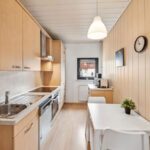
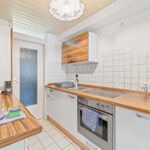
In workers’ accommodation, the kitchen, bathroom and possibly other rooms are often shared. Cleanliness is particularly important here, as nobody wants to walk into a grubby kitchen or find a dirty bathroom.
The basic rule is: everyone tidies up after themselves. Whoever cooks washes up afterwards or puts the dishes in the dishwasher. Worktops are wiped down and the hob is cleaned. Whoever uses the bathroom leaves it clean – hair in the drain or water on the floor is unacceptable.
There are rules for the fridge too. Everyone should have their own section, marked with their name or a colour. Food that has gone off must be thrown away.
Waste separation is mandatory and should be explained in the house rules. Not everyone is familiar with the German system of yellow bins, paper bins and general waste. A simple guide displayed in the kitchen helps to avoid mistakes.
Use of facilities and equipment
Workers’ accommodation is equipped with various appliances and facilities, which must be used correctly.
Washing machine and communal facilities
If there is a washing machine, arrangements must be made regarding its use. Where there are several residents, it is advisable to draw up a washing rota or to agree on a schedule amongst yourselves. The machine should not be left running round the clock, particularly not during quiet hours.
After use, the machine should be cleaned – empty the lint filter, wipe down the drum and clean the detergent compartment. The door should be left open to allow the machine to dry and prevent mould from forming.
Other appliances should also be treated with care. Any faults should be reported immediately so that the landlord can have them repaired. Attempts to repair them yourself are not permitted.
Heating and energy consumption
Heating is a key issue during the winter months. If each resident can heat their own room individually, this isn’t a problem. In communal areas, the aim should be to maintain a comfortable temperature of between 20 and 22 degrees.
Proper ventilation is also important. Giving the room a good air for a few minutes several times a day is both sensible and energy-efficient. Leaving windows tilted open all the time whilst the heating is on is a waste of energy.
Visitor policy and other important points
Visits from external visitors are often a sensitive issue. In principle, fitters are entitled to receive visitors. However, this must remain within reasonable limits.
Day visitors are generally fine, provided they do not disturb the other flatmates. Overnight guests should be agreed with the landlord in advance. A sensible rule is: occasional overnight stays are fine by arrangement, but long-term subletting is not permitted.
Smoking and pets
Smoking is prohibited in most workers’ accommodation. The smell lingers in fabrics and furniture and disturbs subsequent guests. Smokers should go out onto the balcony, the terrace or outside the door. Cigarette ends should be disposed of in the general waste, not on the ground.
Pets are usually not allowed in workers’ accommodation. There are practical reasons for this: other guests’ allergies, potential damage to furnishings and textiles, and hygiene concerns. Anyone who absolutely must travel with a pet should clarify this before booking.
Dealing with damage and problems
Even if you take the greatest care, things can still get broken. The important thing is to report any damage straight away. A broken glass or a stain on the sofa isn’t the end of the world, as long as you’re honest about it.
Folgende Regeln sollten gelten:
- Report any damage immediately: inform the landlord; do not try to cover it up
- No DIY repairs: repairs to be carried out by the landlord
- Liability: Anyone who causes damage is liable for it
- Normal wear and tear: Minor signs of use are normal and not a problem
The house rules should also specify who to contact in the event of technical problems. An emergency number for urgent cases should be displayed in a clearly visible place in the flat.
Departure and communication of the house rules
When you leave, the flat should be left in a clean and tidy condition. This means: rubbish has been disposed of, any major dirt has been removed, the washing-up has been done, and personal belongings have been taken with you. Although the landlord will arrange for a professional end-of-tenancy clean, the flat should be left in a reasonably tidy state.
The house rules should be provided in writing, ideally in printed form in the property and also via email with the booking confirmation. Key points can also be displayed on a notice in the kitchen or bathroom.
The wording should be friendly and easy to understand. Instead of “Forbidden!”, you could write “Please note…”. This is better received and is more likely to be followed. House rules are not meant to be intimidating, but rather a guide.
A well-thought-out set of house rules is the foundation for satisfied guests and smooth operations. It provides clarity, prevents conflicts and demonstrates that the host operates professionally.