Maintenance checklists for flats
A staff flat or apartment is in constant use. Whilst in a private home the residents themselves take care of minor repairs and maintenance, in rented accommodation this responsibility lies entirely with the landlord. Regular maintenance is not only a legal obligation, but also makes good business sense. Identifying and resolving technical issues at an early stage helps avoid costly emergency repairs and downtime. At the same time, well-maintained accommodation ensures satisfied guests who are happy to return and leave positive reviews.
This article outlines the maintenance tasks that need to be carried out regularly in workers’ accommodation and explains how these can be organised systematically. It explains which areas require particular attention and how checklists can help ensure nothing is overlooked. It also provides practical tips for planning and carrying out maintenance work.
Why regular maintenance is essential
Many landlords only get round to carrying out repairs once something has broken. This may seem easier in the short term, but in the long run it leads to higher costs and more hassle. A dripping tap can cause water damage, a blocked extractor hood can be a fire hazard, and a faulty smoke alarm can pose a safety risk.
Regular maintenance prevents such problems. It ensures that appliances last longer, that the accommodation remains clean and in good working order, and that legal requirements are met. Proactive maintenance is particularly worthwhile in the case of workers’ accommodation, which is often subject to greater wear and tear than standard rental properties.
Added to this is the impression made by a well-maintained property. Guests can tell straight away whether someone is looking after the flat or whether no one has checked on it for months. Clean, fully functional facilities and appliances inspire confidence and increase the likelihood of recommendations.
Comply with legal requirements
As a landlord, you are obliged to keep the property in a habitable condition. This includes not only ensuring that the heating, water and electrical systems are in working order, but also safety features such as smoke alarms, fire extinguishers and safe escape routes. In some cases, stricter regulations apply to commercially let properties than to private rentals.
Certain maintenance tasks are required by law. Heating systems must be serviced regularly, smoke alarms checked annually, and electrical installations inspected by qualified professionals at specified intervals. Anyone who neglects these obligations risks not only fines but also losing their insurance cover in the event of damage.
Areas that require regular maintenance
A site accommodation facility comprises various areas, each with different maintenance intervals. Some items need to be checked monthly, others only once a year. A structured approach helps to keep track of everything.
Kitchen and kitchen appliances
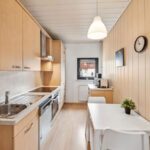
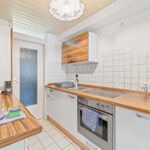
The kitchen is one of the most heavily used areas in a workers’ flat. People cook, wash up and often eat there every day. Consequently, wear and tear is considerable.
Key maintenance points in the kitchen:
- Hob and oven: Check regularly that they are working properly; inspect the hob hotplates and oven seals
- Fridge and freezer: defrost if necessary, check the seals, clean the drain
- Cooker hood: Clean or replace the filter; check that the fan is working properly
- Dishwasher: Clean the filters and seals, top up the salt and rinse aid
- Taps: Check for dripping and limescale build-up
- Worktops and fronts: Check for damage and touch up where necessary
Appliances such as kettles, coffee machines and toasters should also be descaled regularly and checked to ensure they are working properly. Faulty small appliances are not only a nuisance for guests, but can also be dangerous.
Bathrooms and sanitary facilities
The bathroom is another critical area. Damp, limescale and constant use take their toll on taps, tiles and sanitary ware. This is also where most water damage occurs if problems are not spotted in time.
The most important maintenance tasks include:
- Shower and bath: Check silicone seals for mould and cracks; clean drains
- Toilet: Check that the cistern is working properly; check the seals
- Washbasin: Check the tap and trap for leaks; remove limescale
- Ventilation: Clean the ventilation grilles; check that the exhaust air is working properly
- Tiles and grouting: check for damage, secure loose tiles
It is particularly important to check for damp and mould. Mould can spread quickly, especially in poorly ventilated bathrooms, and lead to health problems.
Electrics and lighting
Electrical installations should be checked regularly by qualified professionals. However, between these professional inspections, the landlord can carry out a few checks themselves.
This includes checking all sockets and light switches. Do they wobble? Are there any discolourations that might indicate overheating? Do all the lights work? Are the bulbs still in good condition or do they need replacing?
RCDs should also be tested regularly. Most have a test button that can be used to check that they are working properly. This test should be carried out at least once a quarter.
Heating and hot water
The heating system must be serviced once a year by a specialist company. This is not only a legal requirement, but is also in the landlord’s best interests. A well-maintained heating system operates more efficiently and uses less energy.
Between scheduled maintenance visits, landlords should regularly check that all radiators are heating up evenly and that the hot water supply is working properly. It’s also worth checking the water pressure in the system. If the pressure drops, this could indicate a leak.
Checklists for different intervals
To keep track of all maintenance tasks, it is advisable to create checklists for different intervals. These might include:
Monthly checks:
- Functional testing of all equipment
- Visual inspection for damage or wear
- Cleaning of filters and screens
- Checking smoke alarms
Quarterly checks:
- Thorough cleaning of hard-to-reach areas
- Inspection of silicone joints and seals
- Testing of RCDs
- Monitoring of outdoor areas
Annual maintenance:
- Heating system maintenance by a specialist company
- Electrical inspection by an electrician
- Replacement of wear parts
- Deep cleaning and minor refurbishments
These lists can be customised and expanded as required. It is important that they are worked through systematically and that the results are documented.
Documentation and organisation
Good documentation is just as important as the maintenance itself. It not only helps you keep track of things, but also serves as evidence in the event of legal disputes or insurance claims.
There should be a maintenance file for each property, in which all work carried out is recorded. This should include the date, type of maintenance, measures taken and any findings. Invoices from tradespeople and certificates of inspection should also be filed here.
Modern management software can make this documentation process easier. Many programmes offer reminder functions that automatically notify you when maintenance is due. This prevents important deadlines from being overlooked.
Coordinate external service providers
Not all maintenance work can or should be carried out by the landlord themselves. Heating, electrical work and more complex repairs require specialists. It is therefore worth establishing long-term partnerships with reliable tradespeople.
It is important that these service providers are familiar with the specific requirements of accommodation for technicians. They must be flexible, able to respond quickly and, ideally, available outside normal business hours. A good maintenance partner is worth their weight in gold and can save a lot of hassle in an emergency.
Plan for preventive measures
In addition to routine maintenance, there are also preventive measures that can help avoid more serious damage. These include, for example, replacing wear parts in good time before they fail completely. They also include regularly renewing silicone joints or repainting walls in high-traffic areas.
This sort of work is best carried out during periods of low workload. If you are familiar with your booking patterns, you can schedule maintenance periods specifically for quieter weeks. This minimises downtime and allows for more thorough work without time pressure.